How do you make invisible problems look real?
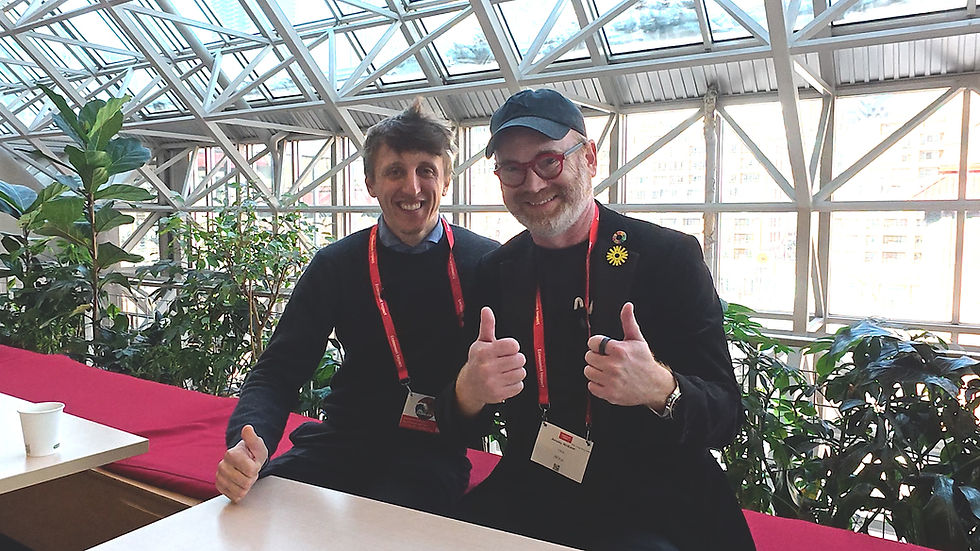
I met Luciano Hiriart-Bertrand at a cafe in Frutillar (Chile), by the Teatro del Lago. A world-famous theatre built on the shores of Llanquihue Lake, overlooking a snow-capped volcano.
Luciano is the Founder of Costa Humboldt, an organisation focused on the conservation of natural ecosystems in coastal areas.
One of the main areas of interest for Luciano is the protection of the Patagonian fjords. Having just been back myself from a 2000+ kilometre trip along the coast of Southern Chile, we start talking about the incredible beauty of that scenery.
However, there is some frustration in Luciano’s voice. The fjords might look pristine and healthy, but underneath the surface the situation is very different.
“The fjords are such sensitive ecosystems, and they have experienced a lot of changes due to external pressures throughout the last 15 years.”
What are the pressures?
“Humans, different human activities. It’s a combination of everything.”
Pollution from urban and industrial activities (waste, chemicals, wastewater), climate change, invasive species such as plumose anemones, and the adverse effects of salmon aquaculture.
"If you go diving near some towns, you see a drastically polluted ocean. You can see batteries, plastic, garbage." He pauses. "It's amazing what we have seen down there."
Luciano explained how the Patagonian fjords play a role comparable to the Amazon forest in terms of CO2 capture. They have “one of the largest interconnected kelp forests on Earth, and we already know why kelps are so important for everyone, and not only for ecosystem services, but for human beings.”
The problem is the fjords are not nearly as famous as the Amazon forest. Plus, when the fjords get damaged and polluted, there is no “smoking gun”. There’s nothing visible.
A forest fire or industrial deforestation in the Amazon is immediately apparent. In the fjords, any damage is hidden under the surface, and the fjords keep looking as beautiful as ever.
Ask anybody on the street, anywhere: “What’s wrong with the Amazon forest?” They’ll say deforestation. It’s easy. There is a clear smoking gun everybody can see.
Ask the same question about the fjords, and nobody will know. Perhaps here in Chile, they might point the finger at the salmon aquaculture, but in reality, they are only a small part of the crisis.
I asked Luciano, if he had a magic wand, what's the one thing that would make the biggest difference?
”Time. We cannot buy time. And if we don't move faster, we will lose what we already have. And we don't know the cost for restoring the places. We need to accelerate the narrative and the efforts. Demonstrate to the world the urgent need. Imagine that you have two lungs. One is the Amazon, and it’s in an ok shape. The other one is the fjords and has stage three cancer. What are you going to do? You're going to treat it, or you're going to let the cancer grow?”
But the patient doesn’t even know.


Comments